When organizations hear the phrase insider threat, they often imagine a malicious employee deliberately stealing intellectual property.
That happens.
But insider risk is much broader.
A departing employee may copy files they believe belong to them.
Someone may accidentally upload confidential material to a personal service.
A developer may move sensitive data to an unapproved AI application.
A privileged user may perform an unusual action during an otherwise legitimate task.
The security challenge is therefore not:
“How do we monitor employees?”
It is:
“How do we identify risky activity involving sensitive data, understand the context, and respond appropriately?”
That distinction matters.
Insider risk is a behavior and data problem
Traditional security controls often focus heavily on external attackers.
But employees, contractors, administrators, and partners already have legitimate access to systems and information.
That means insider-risk detection requires a different approach.
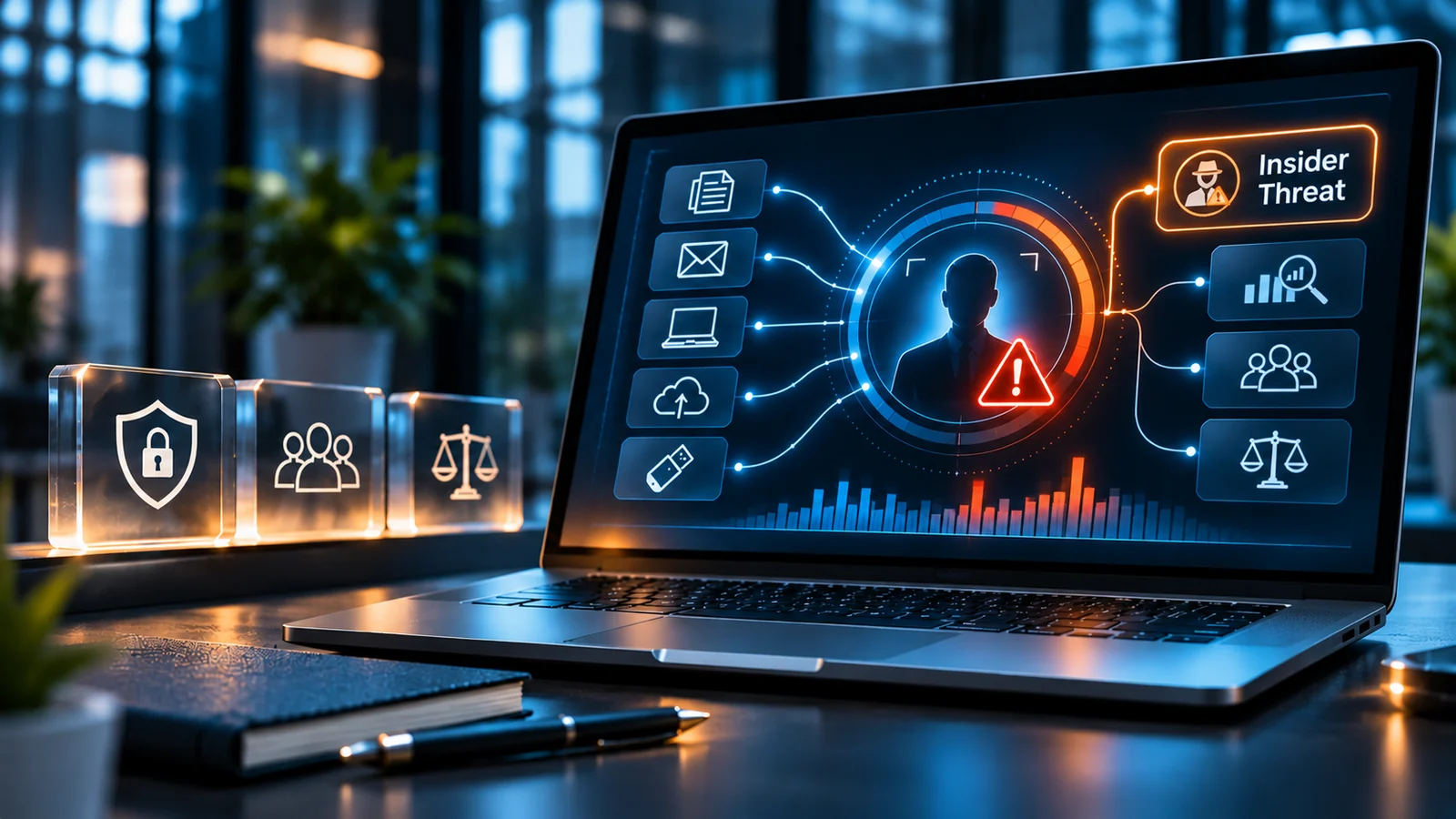
Security teams need to combine signals such as:
- sensitive-data activity;
- unusual file movement;
- risky sharing;
- removable media;
- cloud uploads;
- access patterns;
- privileged activity;
- relevant organizational events.
A single event rarely tells the whole story.
Context determines whether activity is normal, careless, suspicious, or malicious.
Microsoft Purview Insider Risk Management
Microsoft Purview Insider Risk Management is designed to correlate signals associated with potential insider risks such as data leakage, intellectual-property theft, and security-policy violations.
The important word is risk.
An alert should begin an investigation.
It should not automatically become an accusation.
Privacy should be part of the architecture
Insider-risk programs can fail culturally even when they succeed technically.
If employees believe security is monitoring every action without controls or accountability, trust suffers quickly.
Privacy therefore needs to be designed into the program.
Technology alone is not enough.
Organizations should define:
- who can view insider-risk information;
- when identities may be revealed;
- which cases require HR involvement;
- when Legal or Privacy should participate;
- how investigations are documented;
- how long information is retained;
- what constitutes sufficient evidence for escalation.
These decisions should exist before the first serious incident.
Start with specific risk scenarios
Do not begin with:
“Monitor everybody for everything.”
Begin with a small number of scenarios where the organization has meaningful exposure.
Departing employees
Departures can increase data-loss risk, particularly for employees with access to intellectual property, financial information, customer records, source code, or strategic plans.
A program may look for relevant patterns around an approved departure process while maintaining appropriate HR and privacy controls.
Sensitive-data exfiltration
The objective is not simply to detect high file counts.
Look for meaningful combinations of:
- sensitive content;
- unusual volume;
- unusual destination;
- unusual timing;
- user context;
- prior activity.
High-risk or privileged users
Some users legitimately have access to significantly more sensitive information.
That access can justify additional controls—but it should also come with well-defined governance and restricted investigator access.
Risky AI usage
AI creates another destination to which users may send organizational information.
The security question is similar to other data channels:
What information is being shared, where is it going, and is that activity appropriate?
Alerts are not investigations
One of the biggest operational mistakes in insider-risk programs is treating every alert as a case.
Detection systems surface signals.
Analysts establish context.
A healthy workflow may look like:
Signal → Alert → Triage → Context → Case → Investigation → Action
During triage, analysts should ask:
- What sensitive information was involved?
- Was the destination approved?
- Is the volume actually unusual for this user?
- Does the employee’s role explain the behavior?
- Is there a known business process?
- Have similar actions occurred previously?
- Are there relevant identity or endpoint signals?
- Does this require HR, Legal, Privacy, or management involvement?
That process reduces both overreaction and missed risk.
Security cannot own insider risk alone
The most mature programs are cross-functional.
Security
Provides telemetry, technical investigation, containment, and security context.
Human Resources
Provides employment-process context when appropriate and authorized.
Legal
Helps guide investigation requirements, preservation obligations, and legal risk.
Privacy
Helps ensure monitoring and investigation practices align with organizational policy and applicable privacy requirements.
Management
Provides business context and helps determine whether activity is expected.
No single team has the complete picture.
Connect Insider Risk with DLP
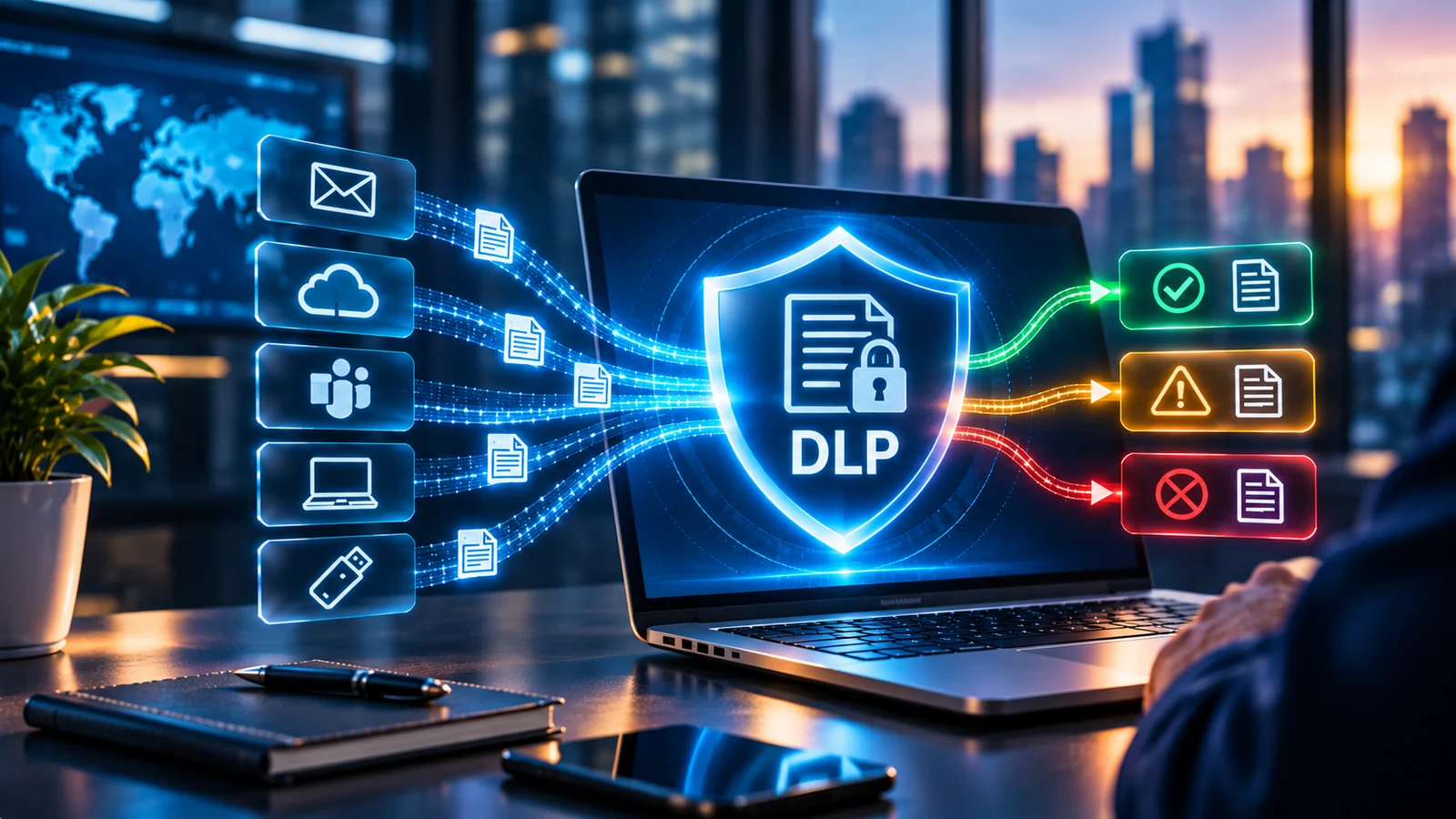
DLP and Insider Risk Management solve different parts of the problem.
DLP asks:
Should this data movement be allowed?
Insider Risk asks:
What does this activity mean in the context of broader user behavior and risk?
Used together, they can provide stronger context.
For example, repeated attempts to move highly sensitive information to risky destinations may deserve different treatment than a single accidental event.
The objective is not to generate more alerts.
It is to make better decisions.
Measure the program by decision quality
Do not measure insider-risk maturity only by alert counts.
Useful measures may include:
- alert-to-case conversion;
- false-positive rate;
- investigation time;
- repeated risky behavior;
- high-risk data channels;
- policy coverage;
- exception patterns;
- remediation outcomes.
A program generating thousands of alerts may be less mature than one generating a smaller number of meaningful investigations.
Build the governance before the incident
The worst time to decide who can access employee-risk information is during a sensitive investigation.
Before deploying broadly, establish:
- purpose and scope;
- roles;
- permissions;
- escalation criteria;
- privacy requirements;
- investigation workflow;
- HR/Legal coordination;
- documentation standards;
- response options.
Then configure technology to support that operating model.
Not the reverse.
Insider risk should protect both data and trust
Organizations have a legitimate responsibility to protect sensitive information.
They also have a responsibility to operate security programs responsibly.
The strongest insider-risk programs balance both.
They use technology to identify meaningful risk, preserve human context, restrict investigative access, involve the appropriate stakeholders, and respond proportionately.
That is what turns insider-risk monitoring into an actual security program.