A credential exposed in a public repository can become an entry point to a private cloud environment. The missing control may be an application secret rather than an open port, and the first suspicious event may look like a successful sign-in.
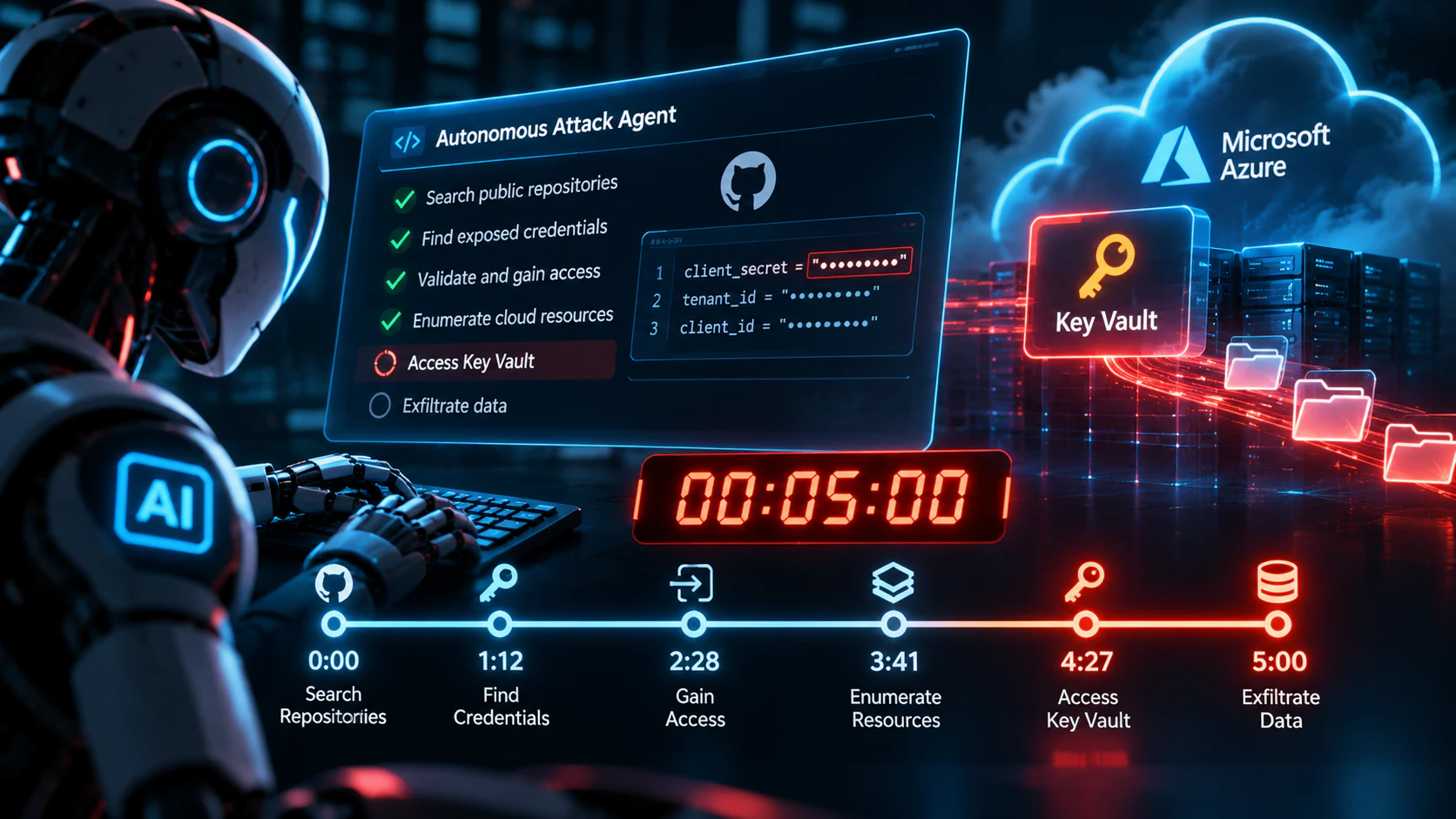
Microsoft Threat Intelligence reported on November 5, 2026 that attackers were using agentic tooling to search public GitHub repositories for authentication material. In one observed case, an AI agent moved from searching for secrets to taking data from Azure Key Vault in five minutes.
That is an observed incident timeline, not a universal deadline. Its practical significance is the reduced opportunity to interrupt an attack after disclosure. AI is shrinking the time between exposure and exploitation.
The weakness is familiar; the operating tempo changes
Leaked credentials and exposed application secrets predate agentic AI. Developers have accidentally committed configuration files, automation credentials and deployment secrets for years. Attackers have also used automated scanning for years.
Agentic workflows can connect activities that previously required more operator attention: finding a candidate secret, interpreting its context, deciding which service it belongs to, and attempting the next relevant action. Running several tasks concurrently can increase coverage as well as speed.
The important change is the potential to shorten the pauses between steps. A queue of exposed credentials is more dangerous when an attacker can evaluate and act on each finding without waiting for someone to review every result.
Think about the complete access path
A useful defensive model follows the sequence from public code to protected data: repository search, secret discovery, credential validation, authentication, cloud enumeration, additional access, and possible data access or exfiltration.
This is a model of potential attacker activity, not a claim that every incident completes every stage. Permissions, credential validity, network restrictions and detection controls can interrupt the sequence.
For defenders, each transition suggests a control or a source of evidence. Repository monitoring can identify disclosure. Identity logs can reveal unexpected authentication. Resource audit logs can show enumeration or sensitive reads. Response becomes harder when those signals are investigated separately by teams that cannot see the same identity.
Start with the application or workload identity associated with a secret. Establish its owner, allowed resources, privileges and normal behavior before deciding how serious the exposure is.
A valid identity can enter through the front door
A firewall can be operating correctly while an attacker authenticates to a public cloud API with a stolen application credential. The service receives valid authentication material; the attacker did not need to break through the organization’s traditional network perimeter.
That does not make perimeter controls irrelevant. It means the defensive boundary also includes identities, application permissions and the conditions under which resources accept requests.
Consider an integration created to read one dataset. If its identity has accumulated permission to read unrelated storage or manage other resources, the potential consequence of a leaked secret grows. Reviewing that permission scope is part of exposure management, even when the integration itself is not publicly reachable.
Deleting the file does not invalidate the credential
Removing a secret from the latest repository version changes what a reader sees now. It does not prove that nobody copied the earlier value or that the identity provider will reject it.
GitHub’s sensitive-data guidance places revocation or rotation before repository-history cleanup. Treat a publicly exposed credential as compromised and coordinate the appropriate revocation or rotation with its application owner.
Operationally, distinguish three outcomes: the disclosure is removed, the old credential is unusable, and the associated access has been investigated. They answer different questions. A closed development ticket covering only the first outcome is insufficient evidence for the other two.
Preserve the exposure timeline and relevant logs. Avoid copying the live secret into a support ticket, chat message or incident report while investigating it.
Investigate what the identity could reach
Credential replacement should be paired with a scoped compromise assessment. Establish when exposure began, which identity the credential represented, and what that identity could access during the relevant period.
Review successful and failed sign-ins alongside resource activity. Look for unexpected locations, unfamiliar tooling, unusual access times, permission changes and reads inconsistent with the application’s purpose. A successful sign-in alone does not establish data theft; missing evidence alone does not establish that no access occurred.
Where the identity could obtain other credentials or create additional access, assess those paths too. The response should follow the permissions and evidence rather than stop at the repository boundary. Record any logging gaps that limit the conclusion.
Reduce the amount of standing access
For new integrations, evaluate authentication designs that avoid distributing long-lived secrets where the platform supports them. For existing applications, identify which secrets are still necessary, where they are stored and who is responsible for replacement.
Separate application identities by purpose. Restrict access to required resources and operations. Include credential retirement when an integration, test environment or supplier relationship ends.
Prevention also belongs in development workflows: supported secret scanning, controls before code is pushed, and a clear response path when exposure is detected. Controls should cover relevant repository history and public exposure beyond the organization’s main repository inventory where feasible.
An alert is useful only if someone can identify the affected workload and contain it promptly.
Connect code, identity and external exposure
Cyber Exposure Management should connect public code exposure, credentials, application secrets, cloud identities and externally visible assets. These are related parts of an access path, even when different teams own them.
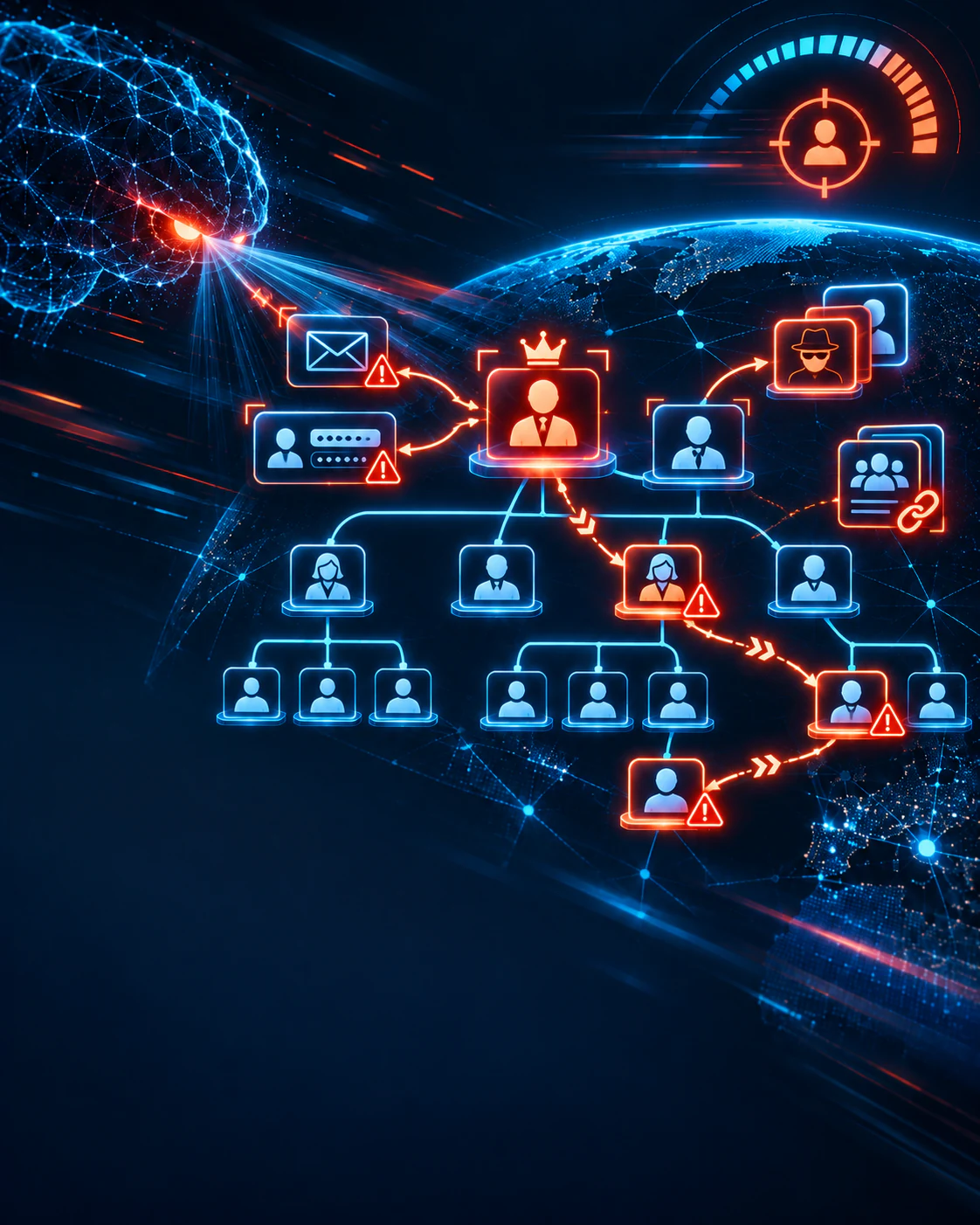
Threat Intelligence adds context about relevant activity and helps analysts decide which signals deserve immediate investigation. The same need for connected evidence appears when stolen organizational identity data supports follow-on targeting.
For a practical review, select a business-critical cloud integration and trace its public footprint, authentication material, permissions, monitoring and emergency owner. Test the response process with an inert example rather than publishing a real credential.
Practical takeaway: measure time to containment
Track how long it takes to identify the owner of an exposed secret, invalidate the old value, assess affected access and verify recovery. Those measures reveal whether the organization can respond within a compressed exposure window.
The five-minute case is a reason to improve readiness, not a prediction that every leak follows the same schedule. Reduce opportunities before disclosure, connect the evidence when exposure occurs, and verify that the original access path has actually been closed.